
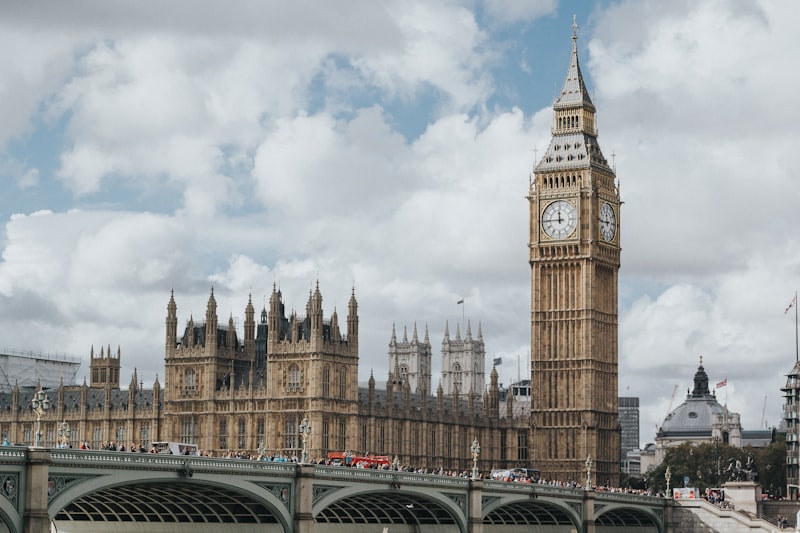
Introduction: A City in Transition
London, a global metropolis, stands at a pivotal juncture. The echoes of Westminster’s political machinations, the tremors in the property market, the pulse of Transport for London (TfL), and the vibrancy of its cultural scene are converging to shape a new narrative. This is London Bureau’s signature analysis, dissecting the currents that define the capital.
Westminster Politics: The Housing Crisis Takes Centre Stage
The corridors of power are abuzz with the Housing and Planning Bill, a legislative behemoth aiming to overhaul the city’s housing landscape. Prime Minister Keir Starmer’s government has pledged to build 1.5 million homes by 2029, but critics argue the target is aspirational at best. “The bill is a double-edged sword,” explains Dr Eleanor Vance, a political analyst at the London School of Economics. “It promises streamlined planning but risks alienating local communities and greenbelt preservationists.”
Meanwhile, the London Assembly is locked in a debate over mayoral powers. Sadiq Khan’s recent push for greater control over private rent caps has been met with fierce opposition from Conservative MPs. “We cannot turn London into a socialist experiment,” warns MP James Henderson (Con, Kensington). The political gridlock underscores a deeper malaise: the city’s governance is struggling to keep pace with its challenges.
London Property Market: Cooling Demand, Rising Anxiety
After a post-pandemic surge, London’s property market is showing signs of a slowdown. Average prices in prime central London fell by 3.2% year-on-year in Q1 2025, according to Knight Frank. Higher interest rates and tax changes are chilling demand. “We’re seeing a flight to liquidity,” says Sarah Mitchell, a property analyst at Savills. “Investors are cautious, and first-time buyers are priced out despite the slowdown.”
Yet rental prices continue to climb, with average monthly rents in Zone 1 surpassing £3,000. The gap between buyers and renters is widening, fueling calls for rent controls. The Renting Reforms Act, due for a second reading, proposes abolishing no-fault evictions, but landlords warn of a mass exodus. “If the bill passes, we’ll see a sell-off of rental properties,” predicts Mark Turner, chairman of the London Landlords Association.
Transport for London: Investment vs. Austerity
TfL’s financial recovery remains fragile. Ridership on the Tube is at 90% of pre-Covid levels, but the Elizabeth line has exceeded expectations, carrying 700,000 passengers daily. However, the network faces a £500 million funding gap. “We’re operating on a shoestring,” says TfL board member Amina Patel. “The government’s refusal to grant multi-year settlements is stifling upgrades.”
The expansion of Ultra Low Emission Zone (ULEZ) to the Greater London boundary in 2024 has reduced emissions by 25%, but backlash from outer boroughs persists. Meanwhile, the long-awaited Crossrail 2 project is shelved indefinitely, a victim of Treasury austerity. Commuters are left with aging infrastructure and fare hikes of 4.6% planned for 2026.
Cultural Events and West End Developments: Resilience Amid Adversity
London’s cultural sector is rebounding, with theatre attendance in the West End up 12% in 2024. Blockbuster shows like “The Tempest” at the Globe and “Hamilton” continue to draw crowds. Yet, rising costs pose a threat. “Energy bills alone have tripled for some venues,” says Oliver James, director of the Society of London Theatre. “We’re relying on philanthropy to survive.”
New developments are reshaping the cultural landscape. The £1.2 billion redevelopment of the Southbank Centre promises a state-of-the-art concert hall by 2028, while the National Portrait Gallery’s £41 million refurbishment has been lauded. However, the closure of the Museum of London’s former site marks a bittersweet transition to its new Smithfield location.
Why This Matters
These strands are interwoven: political decisions dictate housing policy, which affects transport funding, which in turn shapes cultural accessibility. London’s global standing hinges on its ability to balance growth with equity. As the city hurtles towards the 2030s, the choices made today will determine whether it remains a beacon of opportunity or succumbs to fragmentation.
Outlook: A Cautious Optimism
Experts offer a mixed prognosis. “London is resilient but not invincible,” says Dr Vance. The property market may stabilise by 2026 as interest rates ease, but social housing remains underfunded. TfL’s future depends on a new funding model—perhaps a workplace parking levy. Culturally, the city’s diversity remains its greatest asset, but only if venues can afford to stay open.
In Westminster, the battle over housing could define the next election. For now, Londoners navigate a city of stark contrasts: gleaming towers and overcrowded tubes, sold-out theatres and empty shopfronts. The capital’s story is far from over—it is being written in every council meeting, every property transaction, every train delay. And London Bureau will be here to chronicle it.